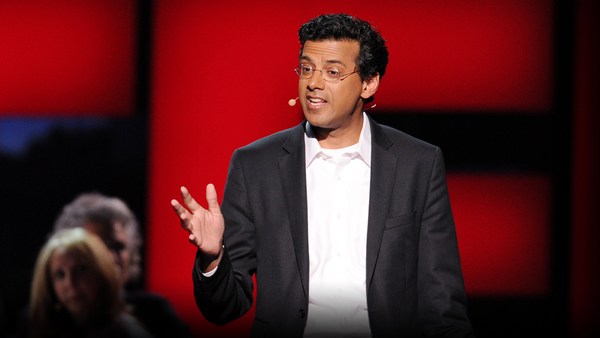
Mel Robbins sits down with James Clear, author of the 25-million-copy bestseller Atomic Habits, for a deep conversation on why behavior change fails and how to fix it.
Clear opens with three truths: action relieves anxiety — taking even one small step on a problem reduces fear because you're now influencing the outcome. The secret to winning is knowing how to lose — resilience comes from having systems that make it easy to bounce back after failure. And procrastinating on something important is choosing to delay a better future — your outcomes are a lagging measure of your habits, the way your bank account reflects last year's financial decisions.
The core framework is the Four Laws of Behavior Change. Make it obvious — use implementation intentions ('I will [behavior] at [time] in [location]') and habit stacking ('after I [current habit], I will [new habit]'). Make it attractive — pair habits with things you enjoy and surround yourself with people who normalize the behavior you want. Make it easy — reduce activation energy by scaling habits down (read one page, not 30 books), use the two-minute rule to just get started, and reduce the scope but stick to the schedule on bad days. Make it satisfying — track habits visually, never miss twice in a row, and find ways to get immediate feedback.
Clear shares the story of Mitch, who lost over 100 pounds by limiting himself to 5 minutes at the gym — mastering the art of showing up before optimizing performance. The key insight: a habit must be established before it can be improved. Standardize before you optimize.
The conversation also covers identity-based habits — instead of setting outcome goals ('I want to lose 20 pounds'), cast votes for the type of person you want to become ('I'm the type of person who doesn't miss workouts'). Each small action is a vote for your new identity. Clear also introduces the failure premortem — before starting, ask 'if this fails in six months, where does it fail?' to anticipate and remove friction points in advance.
On breaking bad habits, Clear explains the inversion: make it invisible (remove cues), make it unattractive (reframe the narrative), make it difficult (increase friction), and make it unsatisfying (add accountability). He emphasizes that environment design is more powerful than willpower — people with the best self-control are the ones who structure their environment so they rarely need it.
Key Takeaways
- Action relieves anxiety — taking one small step on a problem reduces fear because you're now influencing the outcome instead of ruminating
- Scale habits down to reduce activation energy: read one page, do 10 push-ups, go to the gym for 5 minutes — a habit must be established before it can be improved
- Use the Four Laws: make it obvious (implementation intentions), attractive (pair with enjoyment), easy (two-minute rule), and satisfying (visual tracking)
- Focus on identity over outcomes — ask 'who is the type of person who achieves this?' and cast small votes for that identity with each action
- On bad days, reduce the scope but stick to the schedule — showing up for 15 minutes keeps the habit alive; throwing up a zero breaks the streak