What Is Happening to Your Skin — and Why
Healthy skin cells are born in the deepest layer of the epidermis, gradually migrate to the surface over about 28 to 30 days, and are shed invisibly. In psoriasis, the immune system sends faulty signals that accelerate this process to just 3 to 4 days. Cells pile up on the surface before they have a chance to mature, forming the thick, scaly plaques that define the disease.
The immune culprits are T cells and a cascade of inflammatory molecules — particularly TNF-alpha, interleukin-17 (IL-17), and interleukin-23 (IL-23). In psoriasis, T cells mistakenly become activated and attack skin cells as if fighting an infection. The inflammatory molecules they release trigger rapid skin cell production, blood vessel growth (causing redness), and recruitment of more immune cells — creating a self-perpetuating cycle of inflammation and cell overproduction.
Psoriasis has a strong genetic component — roughly 40 percent of patients have a first-degree relative with the condition. Scientists have identified over 80 genetic regions associated with psoriasis risk. However, genetics alone do not cause psoriasis — environmental triggers activate the disease in genetically susceptible individuals. Common triggers include stress, infections (particularly streptococcal throat infections), skin injury (Koebner phenomenon — psoriasis appearing at sites of cuts, scrapes, or sunburn), certain medications (lithium, beta-blockers, antimalarials), smoking, and heavy alcohol consumption.
A 28-year-old graphic designer developed her first psoriasis flare 3 weeks after a severe strep throat infection. Patches appeared on her elbows, then her scalp, then her lower back. "I thought it was a rash that would go away," she said. "When my dermatologist told me it was autoimmune and chronic, I cried. But learning what it actually was — and that effective treatments exist — was the turning point."
Types of Psoriasis
Plaque psoriasis (80-90 percent of cases): The most common form. Raised, red patches covered with silvery-white scales, typically on elbows, knees, scalp, and lower back. Patches can be small and localized or cover large areas of the body. They often itch, burn, and crack and bleed.
Guttate psoriasis: Small, dot-like lesions that appear suddenly, often triggered by streptococcal infection. More common in children and young adults. Often resolves on its own within weeks to months but can become chronic or evolve into plaque psoriasis.
Inverse psoriasis: Smooth, red, inflamed patches in skin folds — armpits, groin, under breasts, buttock crease. Lacks the typical scaling because moisture in these areas keeps the skin smooth. Often misdiagnosed as fungal infection.
Pustular psoriasis: White, pus-filled blisters surrounded by red skin. Can be localized (palms and soles) or generalized (covering large areas — a medical emergency requiring hospitalization). The pus is not infected — it is composed of white blood cells driven by the autoimmune process.
Erythrodermic psoriasis: The rarest and most severe form. Red, peeling skin covering 80 percent or more of the body surface. It can be life-threatening because the skin loses its ability to regulate temperature and protect against infection. Requires emergency medical care.
Beyond the Skin — Psoriasis as a Systemic Disease
Psoriatic arthritis: Up to 30 percent of psoriasis patients develop psoriatic arthritis — an inflammatory joint condition causing pain, stiffness, and swelling. It can affect any joint but commonly involves fingers, toes, wrists, knees, and the spine. A study in the Annals of Rheumatic Diseases found that delayed treatment of psoriatic arthritis leads to irreversible joint damage within 2 years of onset. If you have psoriasis and develop joint pain, stiffness (especially in the morning lasting more than 30 minutes), or swollen fingers/toes, see a rheumatologist promptly.
Cardiovascular risk: The chronic systemic inflammation of psoriasis accelerates atherosclerosis. A meta-analysis in JAMA Dermatology found that severe psoriasis increased the risk of cardiovascular death by 57 percent. Psoriasis patients are also at higher risk for type 2 diabetes, metabolic syndrome, fatty liver disease, and depression.
Mental health impact: A study in the British Journal of Dermatology found that psoriasis patients had a 39 percent increased risk of depression and 31 percent increased risk of anxiety compared to the general population. The visible nature of the disease, the unpredictability of flares, and the social stigma create a psychological burden that is often undertreated. If psoriasis is affecting your mood or social life, this is not vanity — it is a medical impact that deserves attention.
Treatment — From Topicals to Biologics That Clear 90 Percent of Skin
Mild psoriasis (less than 3 percent body surface): Topical corticosteroids are first-line — they reduce inflammation and slow cell turnover. Used in pulses (2 weeks on, 1 week off) to prevent skin thinning. Vitamin D analogues (calcipotriol) slow skin cell growth. Combination products (calcipotriol plus betamethasone) are more effective than either alone. Coal tar preparations and salicylic acid help remove scales.
Moderate psoriasis (3-10 percent body surface): Phototherapy — controlled exposure to UVB light 2 to 3 times weekly slows skin cell turnover. Narrowband UVB is the most common form. A Cochrane review found that phototherapy cleared or nearly cleared psoriasis in 60 to 70 percent of patients within 2 to 3 months. Home phototherapy units are increasingly available.
Moderate to severe psoriasis (10+ percent or significant impact): Systemic medications including methotrexate (reduces immune cell activity, taken weekly), cyclosporine (immunosuppressant for rapid control), and apremilast (PDE4 inhibitor, oral medication).
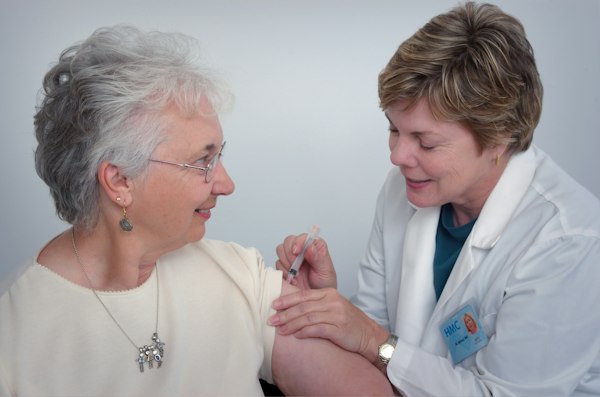
Biologics — the revolution: These injectable medications target the specific immune molecules driving psoriasis rather than broadly suppressing the entire immune system. TNF inhibitors (adalimumab, etanercept) were the first generation. IL-17 inhibitors (secukinumab, ixekizumab) and IL-23 inhibitors (guselkumab, risankizumab) are the newest and most effective. A landmark study in the New England Journal of Medicine found that risankizumab achieved 90 percent skin clearance (PASI 90) in 75 percent of patients — meaning three-quarters of patients had almost completely clear skin. Some biologics require injections only every 3 months.
A 45-year-old construction worker had psoriasis covering 40 percent of his body for 15 years. He had tried topical steroids, methotrexate, and phototherapy with partial improvement. After starting an IL-23 inhibitor, his skin was 95 percent clear within 4 months. "For the first time since I was 30, I wore short sleeves to work," he said. "I do not think people who have never had psoriasis understand what that moment meant to me."
Living With Psoriasis — What You Can Control
Moisturize aggressively. Apply thick, fragrance-free moisturizer immediately after bathing to lock in hydration. Dry skin worsens psoriasis. Ceramide-containing moisturizers help repair the skin barrier. Identify and manage triggers. Stress management, infection treatment, avoiding skin trauma, and limiting alcohol and smoking all reduce flare frequency.
Monitor for psoriatic arthritis. Joint pain, morning stiffness, or swollen fingers in someone with psoriasis should prompt rheumatology evaluation. Early treatment prevents irreversible joint damage. Monitor cardiovascular risk. Discuss cholesterol, blood pressure, and blood sugar screening with your doctor — psoriasis patients need earlier and more frequent metabolic monitoring.
If your current treatment is not achieving meaningful improvement, ask about the full range of options including biologics. Psoriasis treatment has been revolutionized in the past decade, and many patients who suffered for years with inadequate treatment are now achieving near-complete clearance. You do not have to accept living with extensive psoriasis in 2026.