What Is Happening to Your Plantar Fascia
The plantar fascia is a thick band of connective tissue running along the bottom of your foot from the heel bone (calcaneus) to the base of your toes. It functions like a bowstring, supporting the arch and absorbing the shock of each step. Every time your foot hits the ground, the plantar fascia stretches under load. Walking generates forces 1 to 1.5 times your body weight through the foot with each step. Running increases this to 2.5 to 3 times body weight.
For decades, plantar fasciitis was believed to be an inflammatory condition — the name ending in -itis implies inflammation. We now know this is largely incorrect. Histological studies of surgically removed plantar fascia tissue show minimal to no inflammatory cells. Instead, the tissue shows degenerative changes: disorganized collagen fibers, increased ground substance, neovascularization (new blood vessel growth into normally avascular tissue), and micro-tears. The more accurate term is plantar fasciosis — a degenerative condition, not an inflammatory one. This distinction matters because it explains why anti-inflammatory treatments provide only partial relief.
The classic first-step pain occurs because the plantar fascia contracts and tightens during rest. When you are off your feet (sleeping, sitting), the fascia shortens. The moment you stand and load it, the sudden stretch on damaged, shortened tissue produces sharp pain. As you walk and the tissue gradually warms and lengthens, the pain improves — only to return after the next period of rest.
A 48-year-old elementary school teacher stood on hard floors 8 hours daily. Over 3 months, her heel pain progressed from mild morning stiffness to severe stabbing with every step. She tried cushioned insoles and ibuprofen with minimal improvement. An ultrasound showed thickening of the plantar fascia at the heel insertion (normal is under 4mm; hers was 7mm), confirming plantar fasciitis. A structured rehabilitation program — not more rest — was the treatment.
Why It Develops — The Overload Equation
Plantar fasciitis is fundamentally a load management problem. It develops when the demands placed on the plantar fascia consistently exceed its capacity to recover. This can happen through increased demand (sudden increase in activity, new job requiring prolonged standing, starting a running program too aggressively), decreased tissue capacity (aging reduces collagen resilience, weight gain increases load, tight calf muscles transfer more force to the fascia), or both simultaneously.
Key risk factors: Prolonged standing on hard surfaces — the most common occupational cause. Excess body weight — a study in Foot and Ankle International found that BMI above 30 was present in 70 percent of patients with plantar fasciitis. Each additional 10 pounds adds roughly 30 to 40 pounds of force to the plantar fascia with each step. Tight calf muscles (gastrocnemius and soleus) — the Achilles tendon and plantar fascia are mechanically linked; tight calves increase tension on the fascia. A study in Foot and Ankle International found that 83 percent of plantar fasciitis patients had restricted ankle dorsiflexion (inability to flex the foot upward adequately). Sudden activity changes — the runner who jumps from 10 miles per week to 30, the person who switches from desk job to retail. Flat feet or very high arches alter force distribution. Worn-out shoes with collapsed support.
Age matters. The plantar fascia, like all connective tissue, loses water content, elasticity, and healing capacity with age. Peak incidence is between 40 and 60 years.
Treatment — The Evidence Has Changed the Approach
Stretching and loading — the foundation: Calf stretching is the most important single intervention. The plantar fascia and Achilles tendon are part of the same mechanical chain. Tight calves increase fascial tension with every step. A randomized trial in The Journal of Bone and Joint Surgery found that patients who performed calf stretches 3 times daily had significantly better outcomes than those receiving only shockwave therapy. Technique: stand on a step with heels hanging off the edge. Slowly lower heels below the step level. Hold 30 seconds. Repeat 3 times. Perform 3 times daily.
Plantar fascia-specific stretching — pull toes back toward shin while massaging the arch. Perform before getting out of bed and before standing after sitting. A randomized trial in the Journal of Bone and Joint Surgery found that plantar fascia-specific stretching was superior to Achilles tendon stretching alone for pain reduction.
Heavy slow resistance training (HSRT) — a newer evidence-based approach. Stand on a towel roll with toes elevated, rise onto tiptoe slowly (3 seconds up, hold 2 seconds, 3 seconds down). Start with body weight, progress to holding dumbbells. A randomized trial in the Scandinavian Journal of Medicine and Science in Sports found that HSRT produced faster and greater improvement than plantar fascia stretching alone at 3 months. The principle: controlled loading stimulates the degenerated tissue to remodel and strengthen.
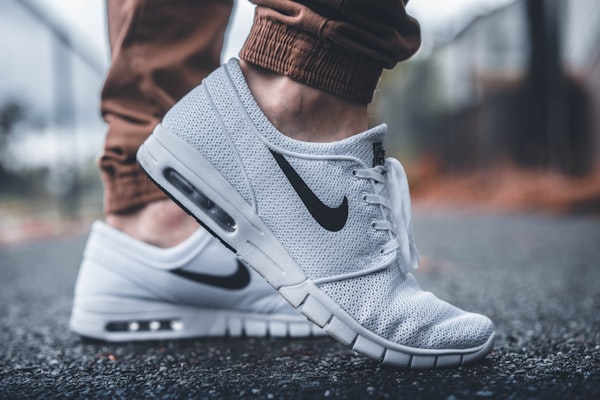
Supportive measures: Footwear with firm arch support and cushioned heel — avoid flat shoes, flip-flops, and walking barefoot on hard floors. Over-the-counter arch supports (Superfeet, Powerstep) provide immediate relief for many patients. Custom orthotics are reserved for structural issues not addressed by OTC options. Night splints hold the foot in dorsiflexion during sleep, preventing the fascia from shortening overnight. A Cochrane review found night splints improved outcomes when combined with stretching.
What the evidence says about common treatments: Cortisone injections — a meta-analysis in the BMJ found that injections provided short-term relief (1 month) but no long-term benefit, and multiple injections increased the risk of plantar fascia rupture. Use sparingly, if at all. NSAIDs — modest short-term pain relief but do not address the underlying degeneration. Ice massage (rolling foot over frozen water bottle) — symptomatic relief, no evidence for tissue healing but safe and helpful for pain. Shockwave therapy (ESWT) — moderate evidence for chronic cases not responding to conservative treatment after 6 months. A meta-analysis in The Journal of Orthopaedic Research found a 60 percent success rate for ESWT in recalcitrant cases.
Roughly 90 percent of cases resolve within 6 to 12 months with consistent conservative treatment. The word consistent is key — doing stretches occasionally is not a treatment program. Daily, multiple-times-daily adherence to stretching and loading exercises is what produces results. Surgery (plantar fascia release) is reserved for the 5 to 10 percent who fail 6 to 12 months of dedicated conservative care.
Prevention — Protecting Your Feet for Life
Daily calf stretching, even when pain-free, is the most effective prevention. Replace running shoes every 300 to 500 miles — once the midsole compresses, support and cushioning degrade. Increase training volume and intensity gradually (the 10 percent rule). Maintain a healthy weight. Choose supportive footwear for prolonged standing — an investment in shoes is an investment in your feet.
If you have had plantar fasciitis before, the recurrence rate is significant — a study in Foot and Ankle International found roughly 30 percent recurrence within 2 years in patients who stopped their exercise program. Continue maintenance stretching indefinitely. Your plantar fascia, like any previously injured tissue, needs ongoing care to remain resilient.